Vanir 101: Basic Symbols of Freyr
I feel like I have been posting more sort of exploratory stuff here and on my various social profiles, so I decided to do this post on the Vanir God Freyr. In the following post you will find a list of symbols or objects associated with Freyr, and the context within his lore. Such symbols can be used in a variety of ways, be it in ritual, prayer, art, or simply as a concrete means of connecting with the god Freyr.
Symbols of Freyr
The Boar

.png)
The boar has far reaching connections within Vanir myth, and is connected to both Freyr and Freyja. Most notably, one of Loki's gifts to Freyr is the boar Gullinbursti, or Golden Bristles. With his glowing mane Gullinbursti is mount of Freyr, and allows the god to travel safely throughout even the darkest of realms without becoming lost. His glowing golden bristles light the path safely to the destination.
The Antler


The Antler is the weapon of Freyr, with which he used to slay the giant Beli and will used during Ragnarok in his battle against the giant Surt. Freyr was once in possession of a powerful sword which fought on its own, but this sword was given to Gerd as a gift by Skirnir in his attempt to woo her to wed Freyr. Since this time, the Antler has become Freyr's sole weapon.
The Phallus

There is much surviving evidence, be it eyewitness accounts or material culture, that the god Freyr was worshiped as a phallic divinity. This makes sense given his connections to agriculture, production, and domestic happiness. Small statuettes of Freyr portray the god seated cross legged with a pointy hat and large erection. Adam of Bremen describes the function of Freyr (Frikko) in his accounts of the temple of Uppsala, as well as the appearance of the idol and its immense phallus.
The third is Frikko, who bestows peace and pleasure on mortals. His likeness, too, they fashion with an immense phallus.
Adam of Bremen: Gesta Hamburgensis 26
The Wain
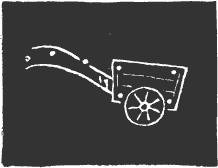
The wain is a drawn cart, or wagon, used for agriculture purposes. It has been connected to several Vanir. There is a connection between the drawing of the god in the wain and the blessing of the land which may indicate some lost ritual practice connected to the Vanir. In the Gylfaginning, it is stated that Freyr drives a wain pulled by Gullinbursti when he attends the funeral of Baldur. In the medieval text Ogmundar pattur dytts, the author describes how the god Freyr and his mortal wife (priestess) were drawn in a wain through the country to bless the land, and the woman became pregnant by the god and this was taken as a great positive omen. Great harvests and mild weather followed. This account bears striking similarities to descriptions of the procession of Nerthus, often assumed to be an early Vanir goddess that may have transitioned into the god Njordh. Rune poems also connect Freyr with the wain in the guise of Ing, or Yngvi Freyr.
The Burial Mound
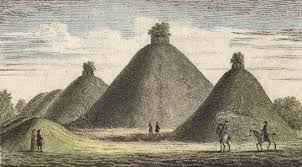
There is a wealth of evidence connecting the god Freyr to the practice of mound building for burial and its inherent connection the the alfar. Freyr himself is said to have been given Alfheim as a "tooth-gift." Male ancestral spirits buried in mounds were often offered to for various reasons, and in many cases they are referred to as elves (alfar). There is also ample evidence connecting Freyr with the figure of Frodhi, a king or kings oft mentioned in Norse myths and saga connected closely with good harvests and abundance. In many accounts the king would be buried in a mound, to which the folk would offer to after his death to ensure the continuation of good seasons.
The Sun

This is more of a modern invention of symbolism for the god but it fits well with his known lore. The Vanir gods are often associated with gold and fire, making the sun a good fit with Freyr, who rules over the productivity of the land itself. In the Gylfaginning it is stated that ...
Freyr is the most renowned of the Æsir; he rules over the rain and the shining of the sun, and therewithal the fruit of the earth; and it is good to call on him for fruitful seasons and peace. He governs also the prosperity of men.
Gylfaginning 24, Brodeur Trans.

There is much surviving evidence, be it eyewitness accounts or material culture, that the god Freyr was worshiped as a phallic divinity. This makes sense given his connections to agriculture, production, and domestic happiness. Small statuettes of Freyr portray the god seated cross legged with a pointy hat and large erection. Adam of Bremen describes the function of Freyr (Frikko) in his accounts of the temple of Uppsala, as well as the appearance of the idol and its immense phallus.
The third is Frikko, who bestows peace and pleasure on mortals. His likeness, too, they fashion with an immense phallus.
Adam of Bremen: Gesta Hamburgensis 26
The Wain
The wain is a drawn cart, or wagon, used for agriculture purposes. It has been connected to several Vanir. There is a connection between the drawing of the god in the wain and the blessing of the land which may indicate some lost ritual practice connected to the Vanir. In the Gylfaginning, it is stated that Freyr drives a wain pulled by Gullinbursti when he attends the funeral of Baldur. In the medieval text Ogmundar pattur dytts, the author describes how the god Freyr and his mortal wife (priestess) were drawn in a wain through the country to bless the land, and the woman became pregnant by the god and this was taken as a great positive omen. Great harvests and mild weather followed. This account bears striking similarities to descriptions of the procession of Nerthus, often assumed to be an early Vanir goddess that may have transitioned into the god Njordh. Rune poems also connect Freyr with the wain in the guise of Ing, or Yngvi Freyr.
The Burial Mound
There is a wealth of evidence connecting the god Freyr to the practice of mound building for burial and its inherent connection the the alfar. Freyr himself is said to have been given Alfheim as a "tooth-gift." Male ancestral spirits buried in mounds were often offered to for various reasons, and in many cases they are referred to as elves (alfar). There is also ample evidence connecting Freyr with the figure of Frodhi, a king or kings oft mentioned in Norse myths and saga connected closely with good harvests and abundance. In many accounts the king would be buried in a mound, to which the folk would offer to after his death to ensure the continuation of good seasons.
The Sun
This is more of a modern invention of symbolism for the god but it fits well with his known lore. The Vanir gods are often associated with gold and fire, making the sun a good fit with Freyr, who rules over the productivity of the land itself. In the Gylfaginning it is stated that ...
Freyr is the most renowned of the Æsir; he rules over the rain and the shining of the sun, and therewithal the fruit of the earth; and it is good to call on him for fruitful seasons and peace. He governs also the prosperity of men.
Gylfaginning 24, Brodeur Trans.
I will end the post here for now, these are the symbols I feel are most explicitly connected with the god. In the future I will probably explore some of these connections more in depth, hope you find this useful or at the very least enjoyable and informative.
In Frith
Cena


Comments
Post a Comment