Some Tenets of Vanatru: UPDATED
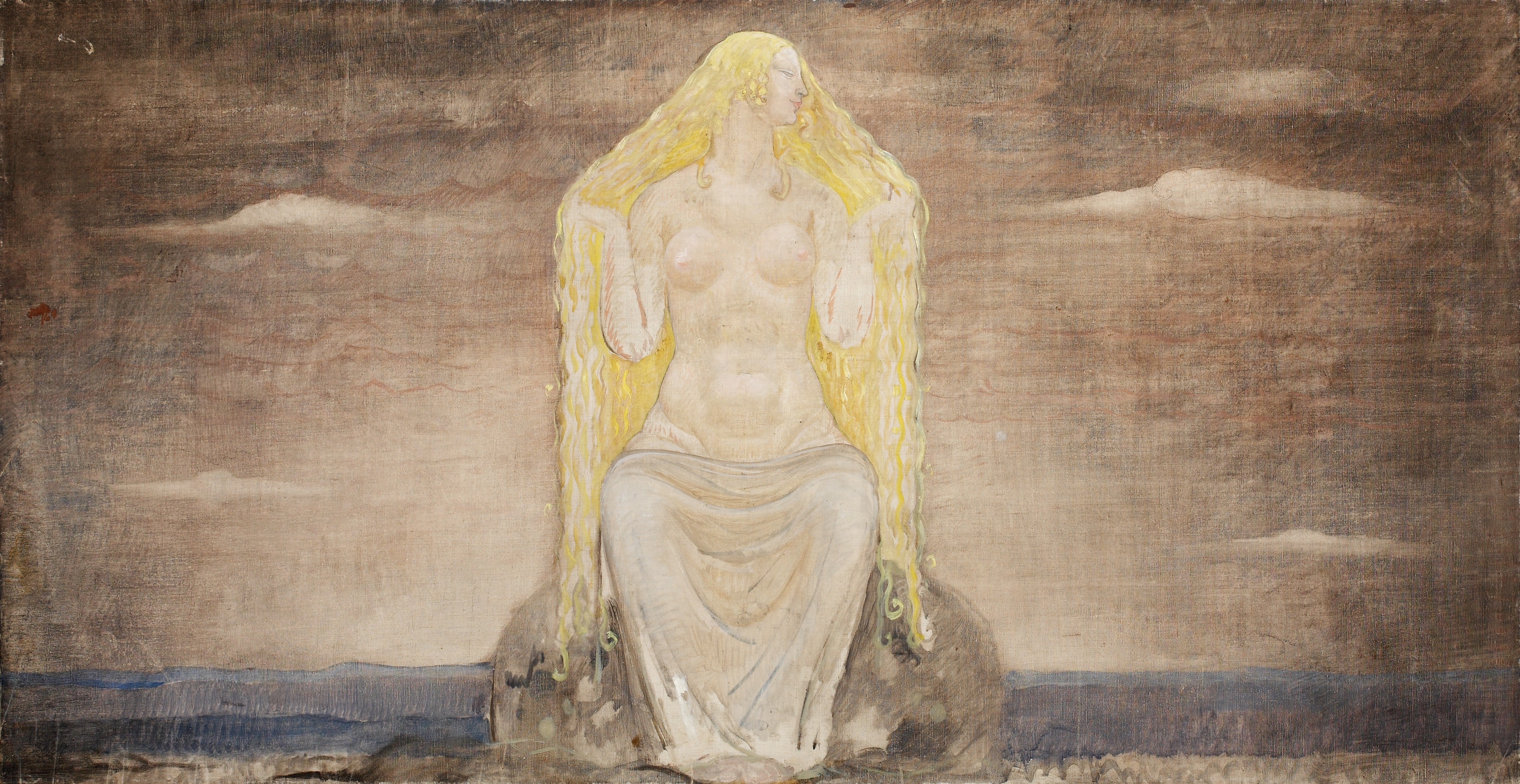 |
| FREJA John Bauer (public domain) |
What is Vanatru?...it is a question that popped into my mind tonight. I mean I obviously know how to define it for the layperson, but what does it mean to me? What would I consider the core tenets, or beliefs of Vanatru, for myself? What differentiates Vanatruar from a Vanir focused Asatruar? I thought perhaps it would be interesting to write a post about what I believe is the core of Vanatru.
{{{{TENETS}}}} of Vanatru
1. a belief in the Vanir gods, and a pledge of loyalty.
To be Vanatru, I believe it is essential to believe in the "realness" of the gods. You may conceptualize this in any number of ways, but a belief in the Vanir is essential. To be VanaTRU you are pledging yourself as true to them, it is a Prioritized relationship. This does not bar the belief in other gods, but rather expresses your loyalty to them as metaphorical kin.
UPDATE: Due to some secondary feedback (thanks for leaving a blog comment btw) I have adjusted some of the wording here when I realized the error I made in using the word "exclusive" to describe the relationship a Vanatru may or may not have with gods outside the Vanir pantheon. I believe that the error was quite clear when taken into context with the following sentence, however I have changed it for the sake of clarity and the minimization of butthurt. I still believe that to be Vanatru, one must make the Vanir gods the priority in practice, otherwise I find it hard to understand why one would call themselves Vanatru? However I am aware that different individuals define spiritual labels in their own way, so the changes have been made.
2. a belief in the sanctity of nature
The Vanir are cthonic divinities, they are symbolic of the earth and natural phenomena. The Vanir control the growth of nature as well as the weather and the general fruitfulness of the earth. This implies a certain sanctity or sacredness of nature. As nature is subject to the divine will, it can be seen as an expression of the gods.
3. a belief that the natural world is inhabited by wights (spirits) who possess intelligence and will
The word "wight" is a word that can describe any independent being, from mortals to gods to land spirits to alfs and the disir. One of Freyja's by names is the Vanadis, connecting her to the disir, or ancestral mothers of ones bloodline. Freyr is the ruler of Alfheim, king of the alfs (light elves) who inhabit burial mounds, barrows, and various other natural objects. His wife is Gerd, (earth), a giantess symbolic of the land itself. The belief in wights and their inhabitance of nature makes them an integral part of the practice of Vanatru.
4. A belief in the separation of the Vanir from the Aesir
This is the belief that often causes controversy between Vanatru and Asatru. In Asatru, a tradition based heavily on the warriorcentric Christianized Eddas, the Vanir and Aesir are portrayed as being one melded tribe of beings. In essence, Asatruar believe that when the Vanir came to live in Asgard, they essentially BECAME Aesir. Both Aesir and Vanir gods are worshipped in Asatru.
Vanatru, on the other hand, do not usually believe this to be true. For Vanatru the differences between the behavior and character of the Vanir and Aesir gods do not indicate a sameness of being. The Vanir do not behave as Aesir do. They do not comply with the same gender roles and social behaviors of the Aesir. They portray an independent nature that does not equate with the Aesir structure of social hierarchy. The word "vana" itself means friend. For the Vanatru, this in itself asserts the independence of the Vanir from kinship with the Aesir. Vanatru see the Vanir as allies and sometimes friends of the Aesir, but never as family. They remain Vanir no matter where they may travel.
5. a belief in the value of diplomacy and peace over aggression.
Modern heathen traditions such as Asatru often focus on the warrior culture as an integral part of heathenry, leaving some to feel a bit uncomfortable taking part in its practice. There is no denying that the Viking culture was very much a warrior culture in some ways. Yet it is telling that in all the surviving literary evidence, little mention is ever made of a Vanir deity and their weapon. Neither Freyja or Njord possess any specific weapon like many of the Aesir gods do. The sword of Freyr is mentioned, yet he gives it away willingly to win the hand of Gerd, knowing full well the cost it will have when he is left without a weapon at Ragnarok. He fights and slays the giant Beli with an antler rather than a weapon. In some myths regarding Frey/Frodhi as well as Nerthus, it is explicitly stated that no weapon or piece of iron is allowed in their presence. And when it came to temples and hofs, to bring a weapon within was considered an act of desecration.
All this and more evidence indicates a great divide between the Aesir and Vanir in terms of the value of war and aggression. Ultimately, though threats may be involved, the conflicts the Vanir are involved with more often than not are solved by a quick tongue or a bit of magic, rather than violence. Freyr himself is known as the god of Frith, a complex idea related to peace and communal justice. For the Vanatru, this means that aggression is a last resort and most often utilized as a protective act or an act of justice. In emulating the Vanir gods, Vanatru focuses more on the value of diplomacy, intelligence, and a dedication to peace as a means of solving conflict within our communities.
UPDATE: I stand by the words I have written here, though some have expressed a concern that I have minimized the warrior aspects of the Vanir by asserting the value of diplomacy over violence as inherently Vanic. This was not my intent. Rather, I wanted to highlight the differences in motivation that the lore illustrates in regards to the Aesir v. Vanir mindset on the use of violent action. There is much evidence, as some have pointed out in their own secondary ways, that the Vanir were mighty warriors in their own right. I am definitely in agreement with this! I simply feel that the Vanir take a different approach to violent action, one that is more defensive and strategic in nature by contrast with the Aesir. I find it interesting that defensive or protective actions are called "passive" by some, and I think it says quite a bit about ones ideas about masculinity and violence in general that I do not have the time nor the desire to address. All the same there is nothing pacifist about the Vanir or the use of intelligence and diplomacy.
6. a dedication to self betterment and knowledge. A common descriptor of the Vanir found in the lore is "wise." Wisdom and knowledge are often attributed or compared to the Vanir. It is said Njord was created in Vanaheim by "wise powers." Heimdall's wisdom is compared to the wisdom of the Vanir. The god Kvasir is said to be the wisest of gods, so much so that the dwarves who killed him claim that he "suffocated in intelligence." The Eddas make it clear that the gift of wisdom is a quality very often associated with the Vanir divine. As a Vanatru, this translates into a deep respect for knowledge and education. The betterment of the mind and the quest for wisdom and knowledge is a common goal shared among Vanatru.
7. honoring the seasons and fertility of nature and ourselves. There is little need to assert that the Vanir are associated heavily with the cycles of the land and the seasons. It is the most common quality known about them. As cthonic deities, the Vanir control the land and its fruitfulness, as well as the realms of sex and wealth. In other words, the Vanir are associated with all things that bring pleasure and happiness to mortals. As a result of this, Vanatru take pains to cultivate an awareness of the earth and its inhabitants as well as a respect for them. We see holiness manifest in the natural world. For some this translates as a need for ecological activism, and for others it is simply a call to remain humble and close to the earth that sustains us all.
8. a belief in equality among the sexes, abandonment of traditional gender roles. Gender roles among the Vanir are anything but concrete. Njord is described as "ergi" or unmanly, a status that to the Norse was an insult that indicated passiveness and even effeminacy. Freyja can be described as anything but the ideal Norse woman. Her marriage is mentioned but in passing, she follows her own will, and is even called promiscuous by Loki. Freyr is known for his virility yet he abandons the sword in favor of winning the love of Gerd. His prowess in battle is renowned yet he is associated most heavily with the ideas of frith and ar, peace and good seasons. Offerings left to him were often domestic in nature, such as the gold foils often found of him and his wife embracing. Few of the Vanir can be viewed as ascribing to the traditional gender roles espoused by the Aesir. The Vanir are defined by their wisdom and independence rather than their gender. As Vanatru, we realize the value of the human being beyond gender. We see gender not as a static but a fluid state, whose purpose is not to define but rather support the individual identity. As a result of this, Vanatru are often accepting of a variety of gender identities or lack therof. In short is not sex that matters, but rather the fulfillment of the self and the personal will.
9. a belief in mutual cooperation between mortals and gods. Ottar, the lover of Freyja, was rewarded for his immense devotions and blots to her personally, as she took to the Underworld to discover his lineage so that he might win a wager with the gods. The priestess of Freyr impregnated by the god was considered so holy the entire hof and land surrounding it were placed under her explicit control. The procession of Nerthus traveled from community to community blessing the land. Offerings and prayers were given to Njord by fisherman and sailors alike. All these offering imply a deep connection between the Vanir and the mortals who believe in and honor them. They indicate a willingness for both interaction and friendship. As Vanatru, we believe that the Vanir gods hear us. We believe they care for us and we believe we can form relationships with them. Cultivating a personal relationship with the gods is part and parcel of Vanatru living.
I think that is enough for now. Please be aware that I am speaking only of my own idea of what Vanatru means. So what do you think? Anything you would add or subtract to the list? Feel free to let me know in the comments below. =)
Cena


Comments
Post a Comment