Uppsala Part 1: Literary Record
The Temple of Uppsala was one of the foremost religious sites historically for the Norse pagans, and by examining it's material and literary records, many aspects of Norse Paganism and the old Heathen traditions can be better understood. It is located in a place called Gamla Uppsala or "Old Uppsala" on the cultivated river valley on the River Fyris in Sweden.
This town was once a religious center for the Norse, as well as a governmental one. The written record describes various traditional religious occasions and celebrations which occurred there throughout the year.
Uppsala was the residence of the legendary Yngling line of Swedish kings which are spoken of in myth and saga. Many literary references claim that Uppsala was among the last areas to be converted to Christianity in the 11th century, and the people there were very much opposed to the loss of their pagan ways.
Many of the accounts left about Uppsala originate with either Roman or Christian authors, so it is important to keep this in mind when examining the old texts. However, the accounts yet do reveal some interesting and quite believable pictures of some of the Norse spiritual traditions which occurred there, and how the people of the time worshiped the gods.
According to Saxo, Uppsala was first settled by Odin, however the Icelandic writer Snorri Sturlson claims it was Freyr or Frey who originally claimed the area as his own.
"Frey took the kingdom after Njord, and was called drot by the Swedes, and they paid taxes to him. He was, like his father, fortunate in friends and in good seasons. Frey built a great temple at Uppsala, made it his chief seat, and gave it all his taxes, his land, and goods. Then began the Upsal domains, which have remained ever since."
One of the more interested practices described at Uppsala was that of blood sacrifice, a ritual concept which was documented in several sources and eyewitness accounts.
"Also Frey, the regent of the gods, took his abode not far from Uppsala, where he exchanged for a ghastly and infamous sin-offering the old custom of prayer by sacrifice, which had been used by so many ages and generations. For he paid to the gods abominable offerings, by beginning to slaughter human victims." (Saxo Grammaticus)
"At this point I shall say a few words about the religious beliefs of the Swedes. That nation has a magnificent temple, which is called Uppsala, located not far from the city of Sigtuna. In this temple, built entirely of gold, the people worship the statues of three gods.
A general festival for all the provinces of Sweden is customarily held at Uppsala every nine years. Participation in this festival is required of everyone. Kings and their subjects, collectively and individually, send their gifts to Uppsala; - and – a thing more cruel than any punishment – those who have already adopted Christianity buy themselves off from these ceremonies. The sacrifice is as follows; of every kind of male creature, nine victims are offered. By the blood of these creatures it is the custom to appease the gods. Their bodies, moreover, are hanged in a grove which is adjacent to the temple. This grove is so sacred to the people that the separate trees in it are believed to be holy because of the death or putrefaction of the sacrificial victims. There even dogs and horses hang beside human beings. (A certain Christian told me that he had seen seventy-two of their bodies hanging up together.) The incantations, however, which are usually sung in the performance of a libation of this kind are numerous and disgraceful, and it is better not to speak of them. (Adam of Bremen)
"Near that temple is a very large tree with widespread branches which are always green both in winter and summer. What kind of tree it is nobody knows. There is also a spring there where the pagan are accustomed to perform sacrifices and to immerse a human being alive. As long as his body is not found, the request of the people will be fulfilled. A golden chain encircles that temple and hangs over the gables of the building. Those who approach see its gleam from afar off because the shrine, which is located on a plain, is encircled by mountains so situated as to give the effect of a theatre. For nine days feasts and sacrifices of this kind are celebrated. Every day they sacrifice one human being in addition to other animals, so that in nine days there are 72 victims which are sacrificed. This sacrifice takes place about the time of the vernal equinox. (in the scolia).
The accounts of Adam of Bremen also reveal more details about the religious practices which were common there. According to his Gesta Hammaburgensis ecclesiae pontificum, he describes the Temple at Uppsala as being adorned with gold, and claims that the temple housed a triple throne upon which religious idols of Thor, Odin, and Freyr were kept. According to Bremen, Wodan was the central figure and was dressed in armor, the figure of Thor held a mace (or perhaps in reality a hammer), and Freyr was in possession of an enormous erect phallus. These figures were given offerings and sacrifices by the people as need for specific areas of concern related to their mythological roles.
One interesting feature of the temple was a series of chains which hang from the gables, described by Bremen as well. He described them as glittering gold and told that they were visible miles away. Some scholars have argued that some medieval churches has a similar design element, which questions the validity of Bremen's assertions. However, it is interesting to note similarities between this design element and the mythological tale of Volundr the Smith, in which he forges seven hundred duplicates of a golden ring and hangs them from the rafters of his home, an action which ultimately causes his enemies to kidnap him in greed for his gold and abilities as a smith. There is some archaeological evidence which has been found beneath the church in modern Uppsala which shows post holes beneath the church that many scholars belief are the remains of the pagan temple which was burnt down during the 11th century during the conversion to Christianity.
Since this has been a rather lengthy post, I am going to stop now that I have discussed the literary records of Uppsala. Next weeks post with contain archaeological as well as historical information about Uppsala and it's role in Norse religion and culture.
In frith
Cena
 |
| Photograph of Uppsala Site in modern times, attributed to OlofE |
This town was once a religious center for the Norse, as well as a governmental one. The written record describes various traditional religious occasions and celebrations which occurred there throughout the year.
Uppsala was the residence of the legendary Yngling line of Swedish kings which are spoken of in myth and saga. Many literary references claim that Uppsala was among the last areas to be converted to Christianity in the 11th century, and the people there were very much opposed to the loss of their pagan ways.
Many of the accounts left about Uppsala originate with either Roman or Christian authors, so it is important to keep this in mind when examining the old texts. However, the accounts yet do reveal some interesting and quite believable pictures of some of the Norse spiritual traditions which occurred there, and how the people of the time worshiped the gods.
According to Saxo, Uppsala was first settled by Odin, however the Icelandic writer Snorri Sturlson claims it was Freyr or Frey who originally claimed the area as his own.
"Frey took the kingdom after Njord, and was called drot by the Swedes, and they paid taxes to him. He was, like his father, fortunate in friends and in good seasons. Frey built a great temple at Uppsala, made it his chief seat, and gave it all his taxes, his land, and goods. Then began the Upsal domains, which have remained ever since."
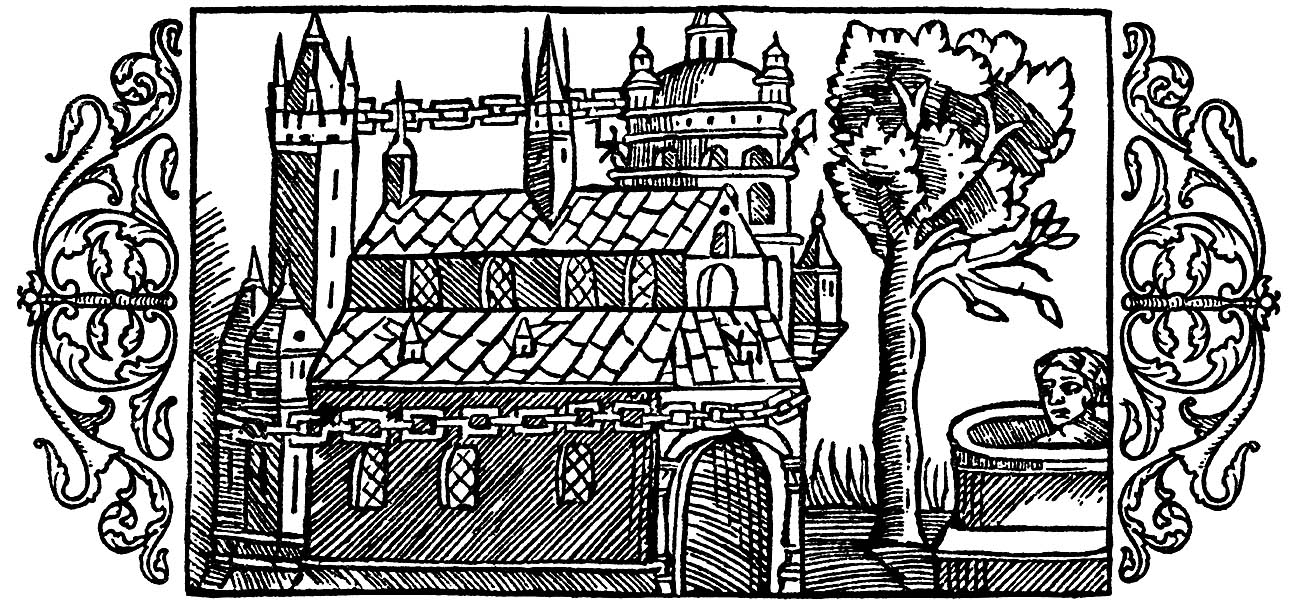 |
| 16th century woodcut of Temple at Uppsala as described by Bremen, artist Olaus Magnus |
One of the more interested practices described at Uppsala was that of blood sacrifice, a ritual concept which was documented in several sources and eyewitness accounts.
"Also Frey, the regent of the gods, took his abode not far from Uppsala, where he exchanged for a ghastly and infamous sin-offering the old custom of prayer by sacrifice, which had been used by so many ages and generations. For he paid to the gods abominable offerings, by beginning to slaughter human victims." (Saxo Grammaticus)
"At this point I shall say a few words about the religious beliefs of the Swedes. That nation has a magnificent temple, which is called Uppsala, located not far from the city of Sigtuna. In this temple, built entirely of gold, the people worship the statues of three gods.
A general festival for all the provinces of Sweden is customarily held at Uppsala every nine years. Participation in this festival is required of everyone. Kings and their subjects, collectively and individually, send their gifts to Uppsala; - and – a thing more cruel than any punishment – those who have already adopted Christianity buy themselves off from these ceremonies. The sacrifice is as follows; of every kind of male creature, nine victims are offered. By the blood of these creatures it is the custom to appease the gods. Their bodies, moreover, are hanged in a grove which is adjacent to the temple. This grove is so sacred to the people that the separate trees in it are believed to be holy because of the death or putrefaction of the sacrificial victims. There even dogs and horses hang beside human beings. (A certain Christian told me that he had seen seventy-two of their bodies hanging up together.) The incantations, however, which are usually sung in the performance of a libation of this kind are numerous and disgraceful, and it is better not to speak of them. (Adam of Bremen)
"Near that temple is a very large tree with widespread branches which are always green both in winter and summer. What kind of tree it is nobody knows. There is also a spring there where the pagan are accustomed to perform sacrifices and to immerse a human being alive. As long as his body is not found, the request of the people will be fulfilled. A golden chain encircles that temple and hangs over the gables of the building. Those who approach see its gleam from afar off because the shrine, which is located on a plain, is encircled by mountains so situated as to give the effect of a theatre. For nine days feasts and sacrifices of this kind are celebrated. Every day they sacrifice one human being in addition to other animals, so that in nine days there are 72 victims which are sacrificed. This sacrifice takes place about the time of the vernal equinox. (in the scolia).
The accounts of Adam of Bremen also reveal more details about the religious practices which were common there. According to his Gesta Hammaburgensis ecclesiae pontificum, he describes the Temple at Uppsala as being adorned with gold, and claims that the temple housed a triple throne upon which religious idols of Thor, Odin, and Freyr were kept. According to Bremen, Wodan was the central figure and was dressed in armor, the figure of Thor held a mace (or perhaps in reality a hammer), and Freyr was in possession of an enormous erect phallus. These figures were given offerings and sacrifices by the people as need for specific areas of concern related to their mythological roles.
 | |
| An early 20th-century painting depicting the mid-winter festival at the Gamla Uppsala temple. Artist: Carl Larsson |
One interesting feature of the temple was a series of chains which hang from the gables, described by Bremen as well. He described them as glittering gold and told that they were visible miles away. Some scholars have argued that some medieval churches has a similar design element, which questions the validity of Bremen's assertions. However, it is interesting to note similarities between this design element and the mythological tale of Volundr the Smith, in which he forges seven hundred duplicates of a golden ring and hangs them from the rafters of his home, an action which ultimately causes his enemies to kidnap him in greed for his gold and abilities as a smith. There is some archaeological evidence which has been found beneath the church in modern Uppsala which shows post holes beneath the church that many scholars belief are the remains of the pagan temple which was burnt down during the 11th century during the conversion to Christianity.
Since this has been a rather lengthy post, I am going to stop now that I have discussed the literary records of Uppsala. Next weeks post with contain archaeological as well as historical information about Uppsala and it's role in Norse religion and culture.
In frith
Cena


Comments
Post a Comment