Kingship: Some ideas presented by "Scandinavian sacral kingship revisited"
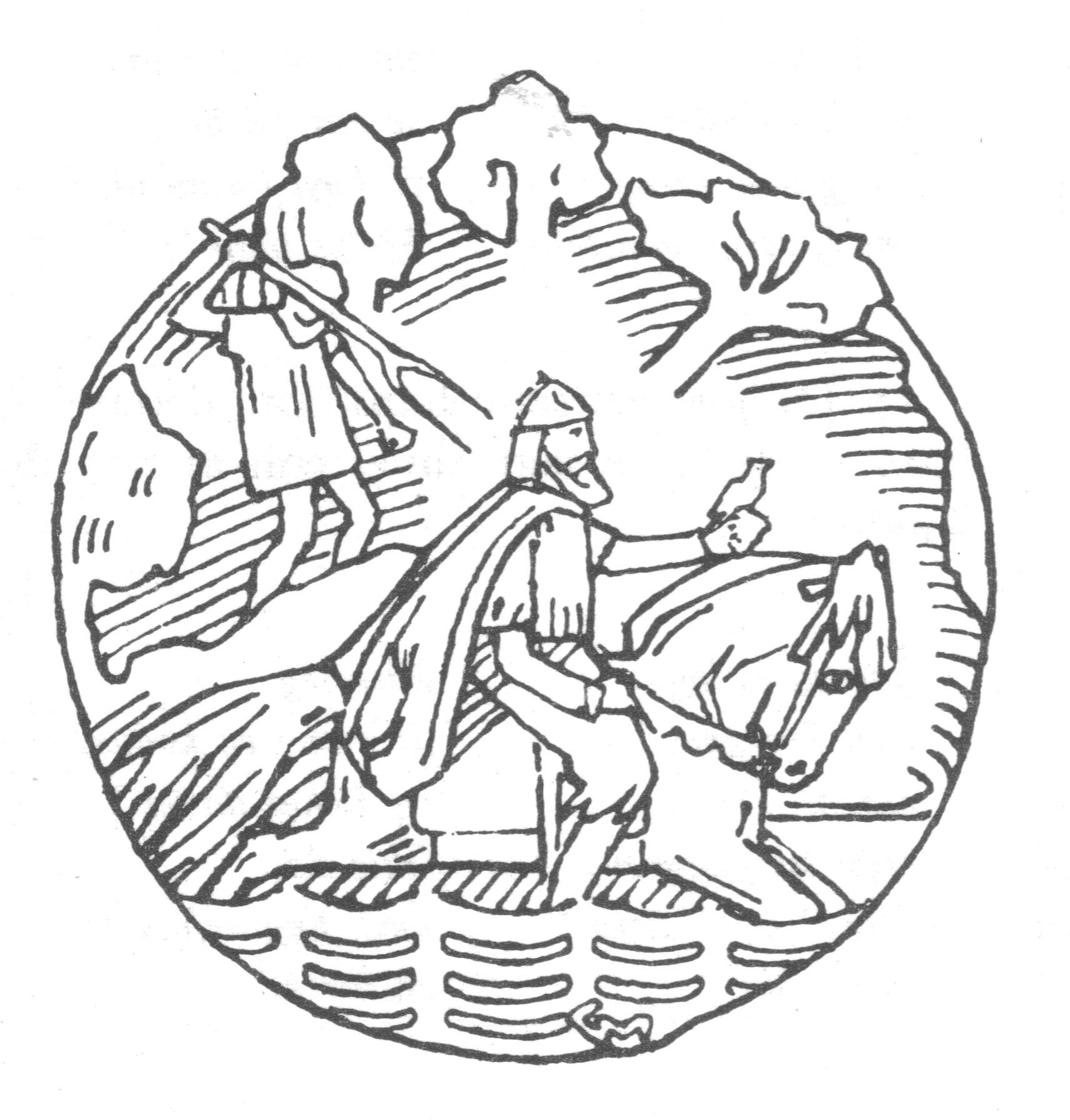 |
| Illustration from Ynglingesaga by Gerhard Munthe |
Much of this discussion of Scandinavian kingship originates with Yngvi Freyr, which most heathens view in modern heathen paths as an aspect of the God Freyr. While the paper focuses mainly on the limitations of dating various sources for lineage based information, I have been engrossed by this article. Such a wealth of information about the divine descent of Scandinavian kings in history! I have found a wealth of new information and thinking points about the history of the Vanes in this work, so I decided instead to share both the article and some juicy tidbits.
For one, the meaning of the word YNGVI is discussed. For some reason I have often heard that the Yngvi was accepted as the original name of Freyr, and some have gone so far as to add that Yngvi Freyr is a completely different godfigure. Freyr, as we known, is simply a word with much the same meaning as "lord." Therefore the name Yngvi Freyr would translate as "the Lord Yngvi" or "King Yngvi." For some reason, I have always felt uncomfortable with this idea.
Apparently, as discussed in this article, several of the noted scholars do not believe YNGVI was originally a name, but a common noun with much the same function as the word Freyr. A term used much like the latin "pater," meaning "lord" or "father." They propose that the word YNGVI as a proper name was derived over time from the linguistic development of germanic language, and the transition of the root of YNGVI from a common noun to a proper name. This makes much more sense to me as a concept, and rings true for me in a sense.
 |
| Freyr on Hlidskjalf (High Seat of Odin) |
Another interesting bit of information is the discussion of symbolic elements of the Skirnismal which detail the proposal of Freyr to Gerd (Earth). Does this tale hide a possible ritual outline of sacred marriage between the sacred king and the land? It contains an array of elements traditional associated with royalty. Firstly the throne, represented by Hlidskjalf (high seat or throne of Odin) upon which Freyr sits without permission and first glimpses Gerd and falls in love. Skirnir offers Gerd first eleven apples and one ring, which she refuses. He then then threatens her with Freyr's sword and a magic staff. According to the paper, all these elements and nature of Gerd illustrate a theme of sacral kingship.
"Skírnismál is essentially about kingship. The throne, the ring, the apples and the staff are all symbols of royalty, the last two symbolising the orb and sceptre respectively. Freyr’s projected marriage to Gerðr symbolises a holy marriage, the king’s marriage to his realm, and the difficulty he has in obtaining her consent symbolises the king’s difficulty in subduing the land to his control."
 |
| Skirnir Accosts Gerd , a depiction by Robert Engels |
Anyway, I thought this piece was wonderful, and these two tidbits represent only two of many possible insights into the history and mythology of Scandinavian kingship contained within it. I defo recommend this paper to any Vanatru, and anyone with an interest in Freyr.
The paper can be downloaded free in pdf form, for anyone interested.
Scandinavian sacral kingship revisited by Rory McTurk
Enjoy!
In Frith,
Cena
This sounds very promising!
ReplyDelete-Soli